01 — Objective
What I'm working toward
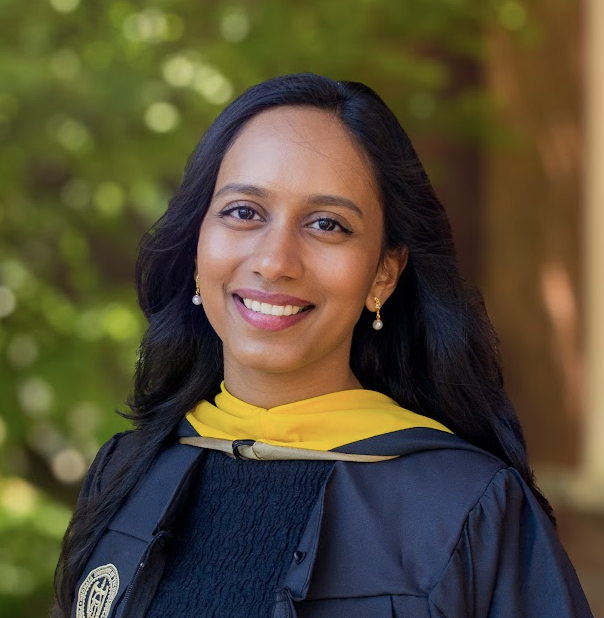
Hi! My name is Harini Sathu, and I pursued an M.S. in Computer Science at Georgia Tech, specializing in Machine Learning (graduating December 2026), with a focus on developing AI that improves clinical decision-making and patient outcomes.
I got into computer science because I liked solving hard problems, but it turned into something more specific once I saw what AI could actually do in healthcare. What pulled me in was the idea that technology could close the gap between what's medically possible and what's actually accessible, using AI to make good care less dependent on where you live or which doctor you happen to see. That's shown up in different forms across my work, from models predicting cancer risk off genetic and clinical data, to graph neural networks for Alzheimer's staging, to multimodal LLM pipelines that pull together imaging, clinical notes, and structured data for things like pediatric oncology extraction and clinical decision support.
What I care about now is building tools that catch disease earlier, make clinical data genuinely usable for doctors and patients, and can actually hold up under the scrutiny healthcare demands. Increasingly, that means thinking about AI implementation science too, not just whether a model performs well, but whether it can actually be adopted into real clinical workflows, trusted by the clinicians using it, and sustained past the pilot stage. That's what I want to keep building toward, whether that's through research, industry, or eventually my own product.
02 — Experience
Where the work has happened
-
Applied Scientist Intern
Oracle Health AI · Redwood Shores, CA
Built LLM-as-judge evaluation frameworks and automated rubric generation pipelines for clinical decision support systems, including multi-agent evaluation infrastructure and semantic versioning based on science stage for rubric quality.
-
Graduate Research Assistant
BioMIB Lab, Georgia Institute of Technology · PI: Dr. May D. Wang
Research spanning clinical LLMs and agentic systems for pediatric oncology survivorship care plans, federated GNNs for AKI prediction, and polygenic risk score modeling on UK Biobank data.
-
Health AI Platform Intern
Oracle Health · Santa Clara, CA
Worked on an agentic third party tooling documentation tool that automated the creation of technical documentation for release cycles.
-
Software Engineering Intern
Cigna - Evernorth Health Services
Alert scheduling and frontend engineering work on internal tools.
-
Biomedical Informatics REU Intern
Wake Forest University School of Medicine
Created brain atrophy and fMRI-based disease staging ML models.
03 — Publications
Papers, posters, and preprints
-
Evaluating Prompting Strategies for Surgical History Extraction for Pediatric Cancer Survivorship Care Plans
AMIA 2026 Annual Symposium
-
Polygenic Stroke Risk and Autoimmune Disease: Associations and Clinical Modifiers
IEEE Transactions on Biomedical Engineering · 2026
-
Federated Learning in Biomedical and Health Informatics: A Systematic Review and Future Directions
TechRxiv · 2026
-
Large Language Models in Healthcare and Biomedical Informatics: A Comprehensive Review
Innovation and Emerging Technologies · 2026
-
Synthetic User Requirements: Sense Making at Early Stages of Product Development
HEAL @ CHI · 2026
-
Computational Approaches to Aid in Survivorship Care Plan Generation Using Electronic Health Record Data
ISLCCC · 2025
-
Developing Semi-Automated Approaches for Generating Survivorship Care Plans for Pediatric Cancer Survivors
IEEE BHI · 2025
-
Enhancing Colon Cancer Risk Prediction in Machine Learning Models Using Polygenic Risk Scores
IEEE EMBC · 2025 · DOI
-
Machine Learning-Based Prediction for Stroke Patient Classification Using Polygenic Risk Scores
IEEE EMBC · 2025
-
Cortical Graph Neural Networks to Predict Dementia Risk Based on MRI-Derived Cortical Surface Morphology
Alzheimer's & Dementia · 2025
-
A Survey of Multimodal Large Language Models in Biomedical Engineering and Healthcare
Authorea Preprints · 2025
-
Uncovering Key Features of Individuals Who Benefit from Polygenic Risk Scores in Prostate Cancer Prediction
ACM BCB · 2024
04 — Projects
Things I've built
agenteval-rx
An open-source SDK for evaluating AI agents on drug discovery tasks, combining RDKit, Therapeutics Data Commons, and agent-trajectory evaluation. Covers trajectory logging, validity gates, error propagation, synthesizability auditing, leakage detection, and multi-objective reporting across nine scoped feature branches.
View on GitHub →XAI Medical Imaging
Explainable AI toolkit for medical imaging, using 2D CNNs and Grad-CAM to visualize which regions of CT and MRI scans drive a diagnosis (COVID-19, viral pneumonia, or normal), addressing the black-box nature of healthcare AI models.
View on GitHub →Climate Survey Influence Maximization
Applies the Friedkin-Johnsen opinion dynamics model to county-level climate attitude data from Yale's Climate Opinion Maps, combined with the Gowalla social network, to identify the most strategically influential individuals for shifting broader public climate sentiment.
View on GitHub →05 — Service
Community & leadership
-
PURA Recipient
Georgia Tech President's Undergraduate Research Award · Spring 2025, for a project on enhancing patient-doctor communication for Alzheimer's disease patients through multimodal, graph-based RAG
-
Webmaster
-
Teaching Assistant
Biomedical Health Informatics (BMED 4478), Georgia Institute of Technology
-
Software Team Lead
Georgia Tech Medical Robotics · 2022 – 2024
-
Vice President
AI in Medicine Society, Georgia Institute of Technology · Fall & Spring 2023